Click on the picture caption to learn more about our programs!!!
 |
| RESEARCH PROGRAM |
 |
| VOLUNTEER PROGRAM |

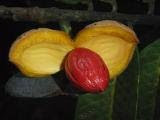
 The fourth ISV group of the season (Kourtney, Kelsey, Adrian, Janelle, Morgan, Janine, Tanja, Richard, Shawn, Heather, Wei, Katherine) has arrived on Saturday and ready to go in the forest to help Waneger, Odara, Lucia and the new GVI interns, Ben and Elliot on the project duties.
1. A total of 216 seed traps were monitored to estimate crop size, seed removal and pre dispersal predation of 53 individuals of neotropical nutmeg (13 Virola koschnyi and 40 Virola surinamensis).
2. 4 Virola koschnyi trees were monitored for frugivores visitation and seed removal, a total of 29 hrs of tree observations were accomplished, during the past two weeks.
3.
4. 1000 lines of data were entered.
5. 50 seed were place for seed fate experiments, and monitored for their fate.
6. 25 new trees were included in the
7. All this field work was accomplished in about 500 hrs of field work.


The third ISV group of the season (Amy, Emelie, Hillary, Britney, Monique, Reba, Sonia, Samantha, Hillary, Belinda, Alexandra) has arrived on Saturday and ready to go in the forest to help Waneger, Odara and Lucia on the project duties.
Here are some pictures of the terrestrial frugivores that are visiting nutmeg to potentially prey on the seeds, or disperse arillated seed that fall from the canopy. The pictures were taken by the trail cameras that were set up on last weeks under a Virola surinamensis tree, with the help of ISV volunteers. From top to bottom (agouti, Armadillo, Paca)


The second ISV group (Amanda, Anna, Stephen, Desirae, Cristina, Amelia, Seth, Jacy, Allison, Tyler and Jessica) has arrive and ready to support our research assitants on data collection during the next two weeks.
A total of 496 se ed traps were monitored to estimate crop size, seed removal and pre dispersal predation of 53 indivuals of netropical nutmeg (13 Virola koschnyi and 40 Virola surinamensis).
6 new females trees were found and incorporated in the monitoring program.
12 trees were monitored for frugivores visitation and seed removal, a total of 78 hrs of tree observations at Virola surinamensis were acomplished.
9 km of hikes were conducted to document frugivores feeding events.
600 lines of data was entered.
All this field work was acomplished in about 600 hrs of field work.
Thanks so much for your support to our field assistants.

The first ISV group ( Melissa, Dana, Alayna, Raeanne,Samuel, Jane, Jessica, Amanda, Lauren, Danielle, Morgan) of the season have accomplished a week of data collection. During this week they have helped to our research assitants to conduct focal trees observations, setting, maintaining and monitoring seed traps under the fruititng nutmeg trees.
We found a dead female of the mexican porcupine (Sphiggurus mexicanus), during a orientation hike in the Punta Rio Claro Wildlife Refuge. This is a exciting report as this species have not been report in the Osa Peninsula, in fact it was considered abscent in the southwerstern part of country. We have hear a few sightings reports from local guides, but for the first time we have found a specimen.
This rodent feeds mostly on seed and fruits. It is a night time forager and spent most of its time in the canopy. In addition, is solitary. Probably due to these facts, this species has been rarely see by people in the area.
This report spans the range of distribution of the mexican porcupines in Costa Rica and adds one more mammal species to the Osa Peninsula biodiversity.